
Brand overview: For the bigger picture on Clemence (what to look for + best picks), see our Clemence field watches guide.
TL;DR: The Clemence Munro is a modern microbrand field watch that leans into the “thin, tough, legible” formula. If you like the idea of a go-anywhere field watch with a high-beat automatic movement (Miyota 9039) and more-than-typical water resistance, the Munro is worth a serious look.
Note on specs: Clemence has released the Munro in different colors/editions, and listings can vary by run. The quick sheet below reflects commonly listed specs, but always verify the exact reference you’re buying.
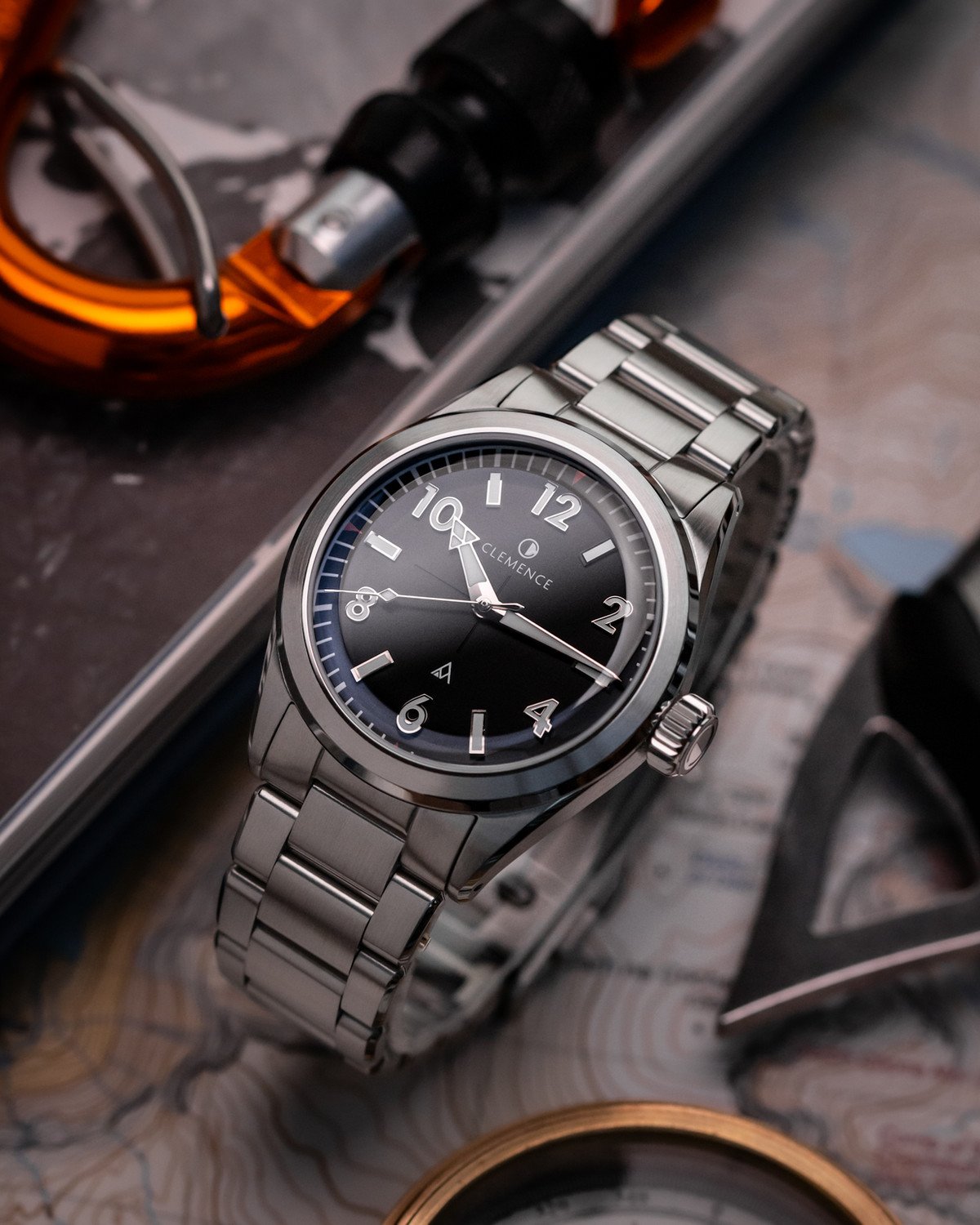
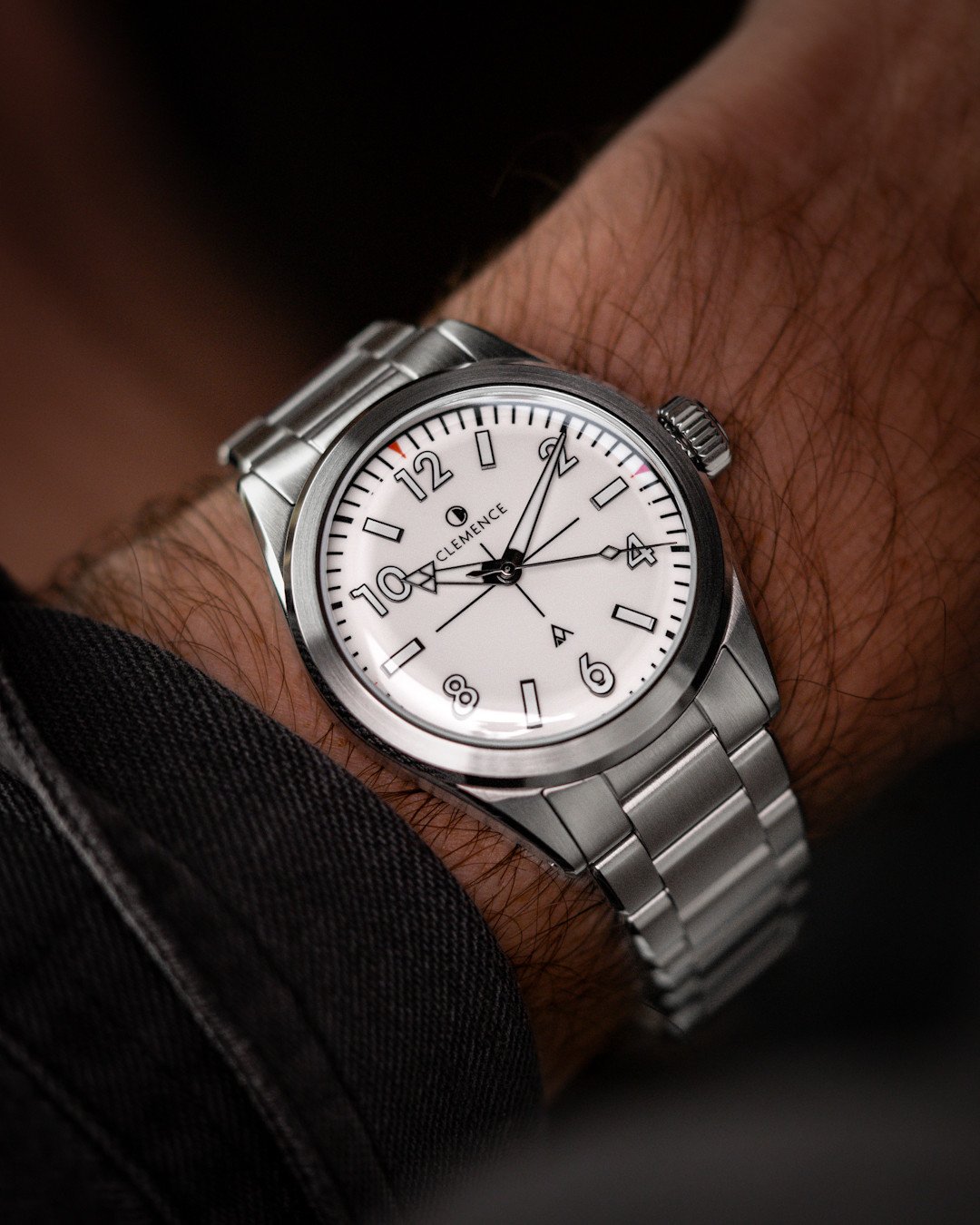
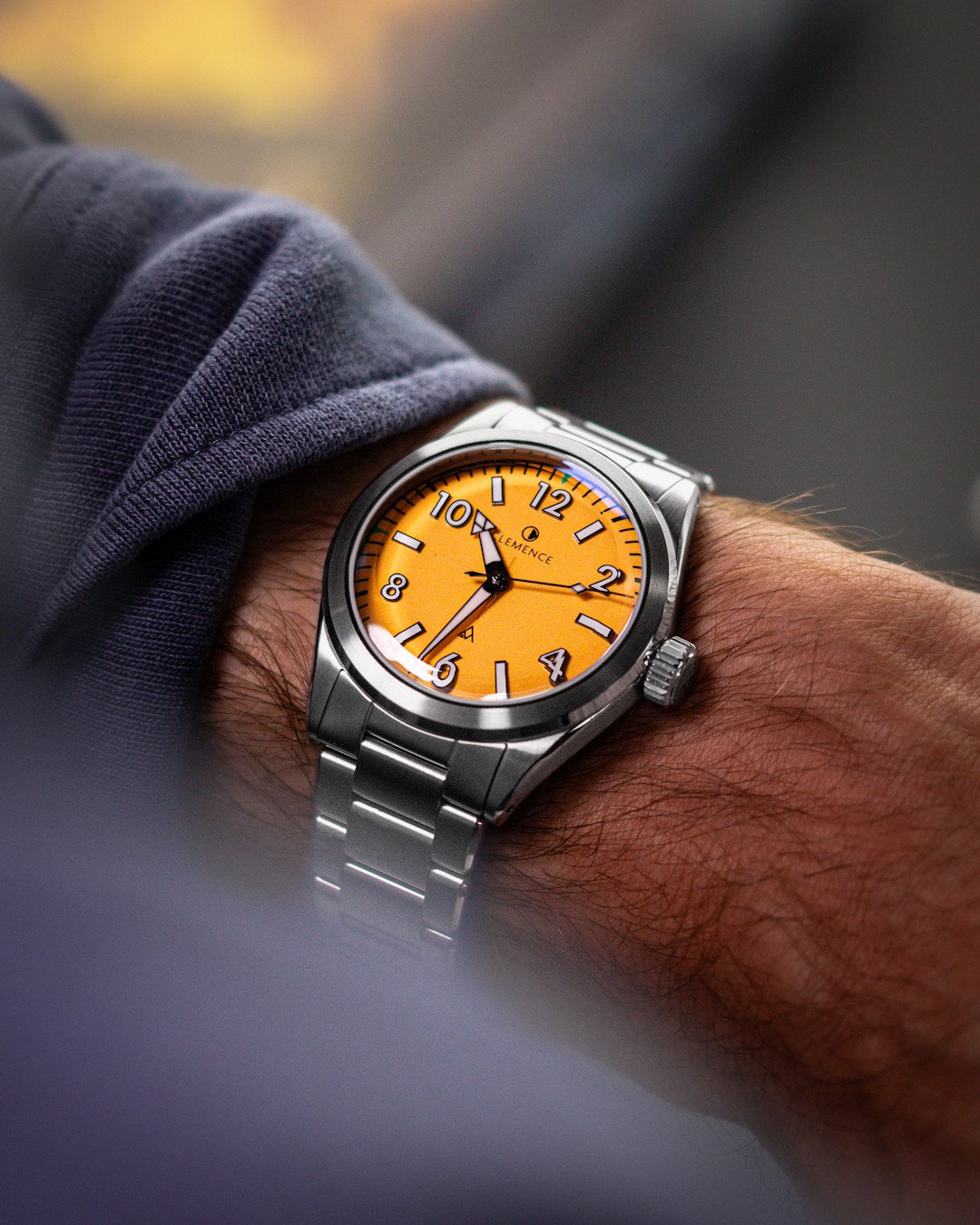
At a glance
- Style: clean, contemporary field watch (more “everyday tool” than “vintage reissue”)
- Why people like it: very wearable size, slim profile, high-beat automatic
- Best for: daily wear, travel, and anyone who wants a tougher field watch without going full dive-watch chunk
- Not ideal if: you want a big 40–42mm case, a true vintage A-11 look, or a very busy dial
Clemence Munro quick specs (typical listings — verify your reference)
- Case size: often listed around 37–38mm
- Lug width: typically 20mm (strap ecosystem is huge)
- Thickness: commonly listed around ~10mm including crystal
- Movement: Miyota 9039 (high-beat automatic; no-date layout)
- Crystal: sapphire (often) — double-check if the listing is older or an unusual edition
- Water resistance: commonly listed at ~150m
If those numbers sound “too good for a field watch,” that’s kind of the Munro’s pitch: it’s trying to feel like a refined daily tool, not a delicate vintage piece. If you’re new to the category, start with our beginner explainer: What is a field watch?
Design & legibility
The Munro lands in a sweet spot between classic field-watch cues (clear Arabic numerals, practical minute track, straightforward handset) and modern restraint. The overall impression is more “clean instrument” than “heritage military cosplay.”
What I like about this style for a field watch is that it stays readable in messy real life: quick glances in a meeting, on a train, while cooking, or outside in mixed light. If you care about legibility as a buying criterion (you should), our checklist breaks down what to look for: How to Choose a Field Watch (10-point checklist).
On-wrist feel: the Munro’s real advantage
Most “field watches” split into two camps:
- Vintage-leaning (often smaller, thinner, sometimes with acrylic crystals or lower WR)
- Modern tool-ish (often bigger/thicker, sometimes drifting into dive-watch proportions)
The Munro tries to cherry-pick the best parts of both: it aims for an easy-wearing diameter and a notably slim profile, while still offering durability specs that feel genuinely practical for daily use.
Why does thinness matter? It’s not just comfort. A slimmer watch usually slips under cuffs more easily, snags less on backpack straps, and feels less “present” during long days. For a field watch that’s meant to be worn a lot, those little annoyances are the difference between “favorite watch” and “nice watch I don’t reach for.”
Movement: Miyota 9039 (high-beat) in real life
The Miyota 9039 is a popular choice for modern microbrands because it hits a practical balance: high-beat (smooth-ish seconds hand), generally reliable, and easy to service compared to more exotic options. It’s also a no-date movement, which is part of why the Munro’s dial can stay clean and symmetrical.
If you’re comparing automatics and you’re not sure what features matter, the two most important “daily-use” questions are:
- Does it hack? (seconds hand stops when you set the time)
- Does it hand-wind? (you can top it up without shaking it)
Here’s a simple explanation of the hacking feature and why it’s useful on a field watch: Hacking seconds explained.
Durability: water resistance, crystal, and “field” reality
One thing I like about modern field watches is when they’re honest about real-world use. A watch doesn’t have to be a dive watch to be “tough,” but it should tolerate rain, hand-washing, sweat, and the occasional bad decision.
If the Munro you’re looking at is indeed rated around 150m, that’s more than enough for normal daily life and light water activities. (The caveat is always seals and servicing: water resistance is a maintenance item, not a personality trait.) If you want the quick decode of water-resistance numbers, use this: Water resistance explained (30m vs 50m vs 100m).
Crystal choice also matters for ownership. Sapphire is great for scratch resistance, but it can chip if you really smack it. Mineral scratches more easily, acrylic scratches the easiest but can be polished. If you want a deeper breakdown, we’ve got it here: Sapphire vs mineral vs acrylic (field watch context).
Straps: 20mm lugs = endless options
A 20mm lug width is basically the universal standard for strap availability. That’s good news because straps are where a field watch becomes “yours.” A few practical combos that work especially well with a clean modern field watch like the Munro:
- Single-pass nylon for the thinnest feel (less stacking under the case)
- Traditional NATO if you like the look and want extra security
- Canvas for the outdoorsy, low-gloss vibe
- Leather to dress it up without losing the field-watch identity
If you’re picking your first strap setup, these guides help:
- Best straps for field watches (NATO, canvas, leather, rubber)
- NATO vs Zulu vs single-pass (what’s the difference?)
Pros & cons (practical, not hype)
Pros
- Wearable size that still reads like a “real” tool watch
- High-beat Miyota 9039 keeps the dial clean (no-date symmetry)
- Strong everyday-durability specs on paper (especially if your version is ~150m WR)
- 20mm lug width makes strap experimentation easy
Cons
- No-date isn’t for everyone (some people need a date)
- Smaller diameter can feel too compact if you prefer 40–42mm watches
- Microbrand availability can be batchy (you may have to wait for restocks)
Alternatives to consider
The Munro is a particular flavor: slim, modern, and legible. If you’re shopping in the same “field / explorer-ish daily tool” lane, a few good comparisons:
- RZE Resolute 36 — a smaller, tougher-feeling titanium option with strong value: read the review.
- Traska Summiteer — a hardened-steel microbrand that’s popular as a one-watch travel piece: read the review.
- Hamilton Khaki Field Mechanical — the classic “heritage” choice if you want the traditional field-watch vibe: read the review.
- Vaer C3 solar (36mm) — if you want low-maintenance, grab-and-go field practicality: read the review.
If you want to browse widely by style/price before deciding, the fastest routes are our Reviews hub and the Microbrands / brands hub.
Buying notes (quick checklist)
- Confirm the exact edition (dial color, lume style, strap/bracelet bundle, etc.).
- Verify the full spec list on the product page for your reference (especially WR, thickness, and crystal type).
- Plan your strap setup early — 20mm makes it easy to tailor the vibe (nylon for casual, leather for smarter).
Where to buy (Amazon)
- Amazon (US): Search “Clemence Munro watch”
Verdict
If you like the idea of a field watch that wears compact and slim but doesn’t feel delicate, the Clemence Munro is a compelling microbrand pick. It’s a very “2020s field watch” in the best way: clean design, practical movement choice, and durability that’s aimed at real daily use.
Next step: if you’re comparing multiple brands, start with the category-level browse: Microbrands and Best field watches under $500.