
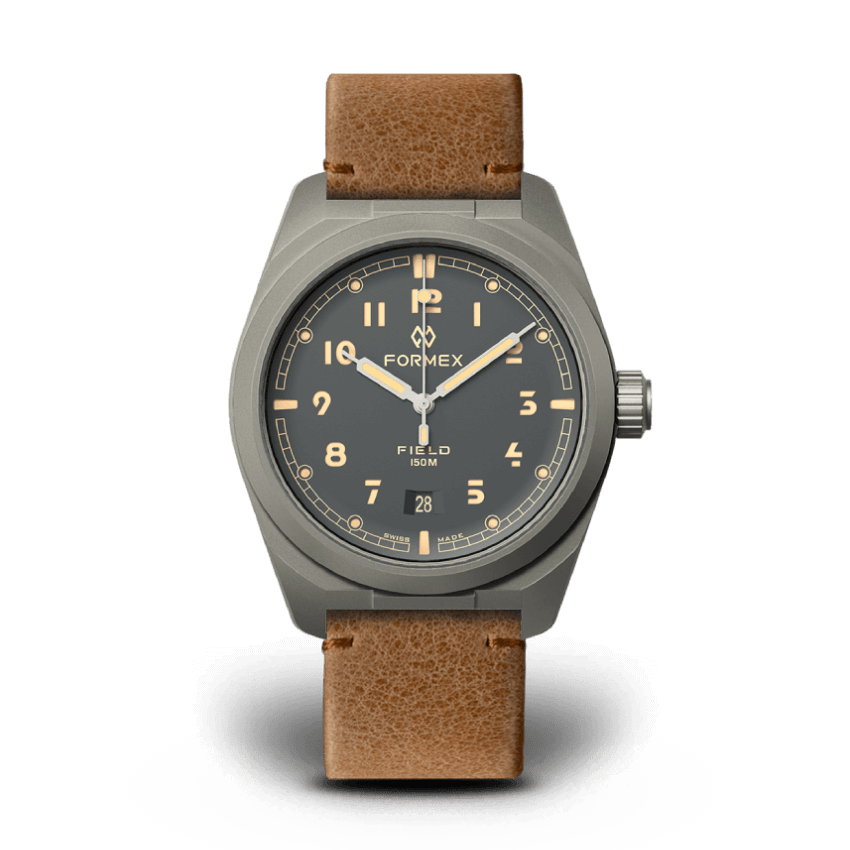
Brand overview: For a high-level take on what Formex does well (and how the Field Automatic fits the field/explorer category), see our Formex field watches guide.
When people think “field watch,” they often picture a vintage military dial on a nylon strap. That style is timeless, but it isn’t the only way to do a field watch well. Formex approaches the category from a different angle: modern Swiss engineering, clean design, and a focus on comfort and usability rather than pure nostalgia.
This review is for anyone who likes the idea of a field watch (legible, durable, everyday wearable) but wants something that feels more contemporary—and a little more refined—than the classic Hamilton/Seiko/Timex look.
Quick take
The Formex Field Automatic is a “field watch” for people who don’t want cosplay. It keeps the core priorities (legibility, durability, all‑day comfort) but wraps them in a more modern, engineered case—especially appealing if you find some traditional field watches a bit too vintage-looking for daily life.
Specs (quick reference)
Specs can vary by generation and configuration. The list below reflects commonly listed specs for the Field Automatic line; always double-check the current Formex product page for the exact version you’re considering.
- Case material: Titanium (often described as hardened / coated titanium)
- Diameter: Typically ~40–41mm
- Lug-to-lug: Commonly cited around ~46.6mm (some sources list slightly higher depending on generation)
- Thickness: Around ~10.5–10.6mm
- Lug width: 20mm
- Water resistance: 150m
- Crystal: Sapphire (often with internal anti-reflective coating)
- Movement: Sellita SW200-1 (automatic)
On-wrist: proportions, comfort, and finishing
In real-world wear, this watch is less about a spec-sheet flex and more about how it sits on the wrist. The combination of a relatively compact lug-to-lug and a thin profile (for an automatic tool watch) helps it wear flatter than you’d expect if you only look at diameter.
Titanium also changes the whole experience: you notice the watch when you put it on, and then it mostly disappears. If you do long days at a desk, travel frequently, or simply hate “wrist fatigue,” titanium is one of the few upgrades you feel immediately.
If you want a point of comparison for how a more traditional steel field watch wears, see: Hamilton Khaki Field Mechanical 38mm (H-50) review.
Dial design and legibility
Field watches live and die on readability. Formex keeps the dial layout clean with strong contrast and a straightforward handset, but the overall vibe is modern rather than “heritage military.” The result is a watch that still reads instantly, yet doesn’t scream re-issue.
If you’re tired of busy inner 24‑hour tracks—or you simply prefer a cleaner dial in office settings—this approach is a feature, not a bug.
Lume
Expect solid “tool watch” lume rather than dedicated diver-level brightness. For most normal use (checking the time indoors at night, quick reads in a dark room), the Field Automatic does the job. If lume performance is your number-one priority, it’s worth comparing against brands and models known for lume-forward designs.
If you want a broader framework for what lume specs actually mean in day-to-day use, see our guide: Field watch lume guide (C3 vs BGW9, tritium, and what matters).
Movement and daily ownership
Many versions of the Field Automatic use the Sellita SW200-1, a widely used Swiss automatic that most competent watchmakers can service. That matters because “ownership” isn’t just accuracy—it’s also ease of service, parts availability, and having a movement that doesn’t require any unusual babysitting.
If your main goal is maximum convenience (set it and forget it), solar quartz still wins. A good reality-check alternative is: Timex Expedition North Field Post Solar review.
Pros and cons
- Pros: Modern, non-vintage design language while keeping field-watch priorities
- Pros: Titanium makes it feel genuinely lightweight for daily wear
- Pros: Strong overall “engineering” vibe (comfort-first tool watch)
- Pros: Practical water resistance (150m) for a field-oriented daily watch
- Cons: If you want classic military authenticity, the modern look may feel too clean
- Cons: Depending on configuration, it can sit in a price band where alternatives become very compelling
- Cons: If you’re buying purely for lume, some models in the category will beat it
Alternatives (and why you might prefer them)
- Hamilton Khaki Field Mechanical 38mm — the classic choice if you want the traditional field-watch look and feel.
- Seiko 5 SRPG27 — strong value if you want an automatic field watch without spending “Swiss engineered” money.
- Bulova Hack — for a more heritage/military-leaning aesthetic at a friendlier price.
- RZE Resolute 36 — another titanium-forward option if you prefer smaller sizing.
- Vaer C3 solar (36mm) — if you want practicality and grab‑and‑go ownership.
Budget context (if you’re comparing where Formex lands in the market): best field watches under $1,000 and best field watches under $2,000.
Who it’s for
- People who want a field watch that feels modern and refined
- Daily wearers who care about comfort and low wrist fatigue
- Buyers who want a Swiss automatic tool watch but don’t want a diver aesthetic
Who should skip it
- If you only want vintage military authenticity, you’ll likely prefer a more traditional dial and case shape.
- If maximum convenience is the goal, solar quartz remains the king for true “no drama” ownership.
Where to buy (Amazon)
- Amazon (US): Search “Formex Field Automatic watch”
Verdict
The Formex Field Automatic is a great reminder that a field watch doesn’t have to be retro to be “correct.” If you want a modern, engineered daily tool watch with field-watch priorities—legibility, comfort, and real usability—this is the kind of watch worth considering.
Featured image credit: Formex (official product image).