
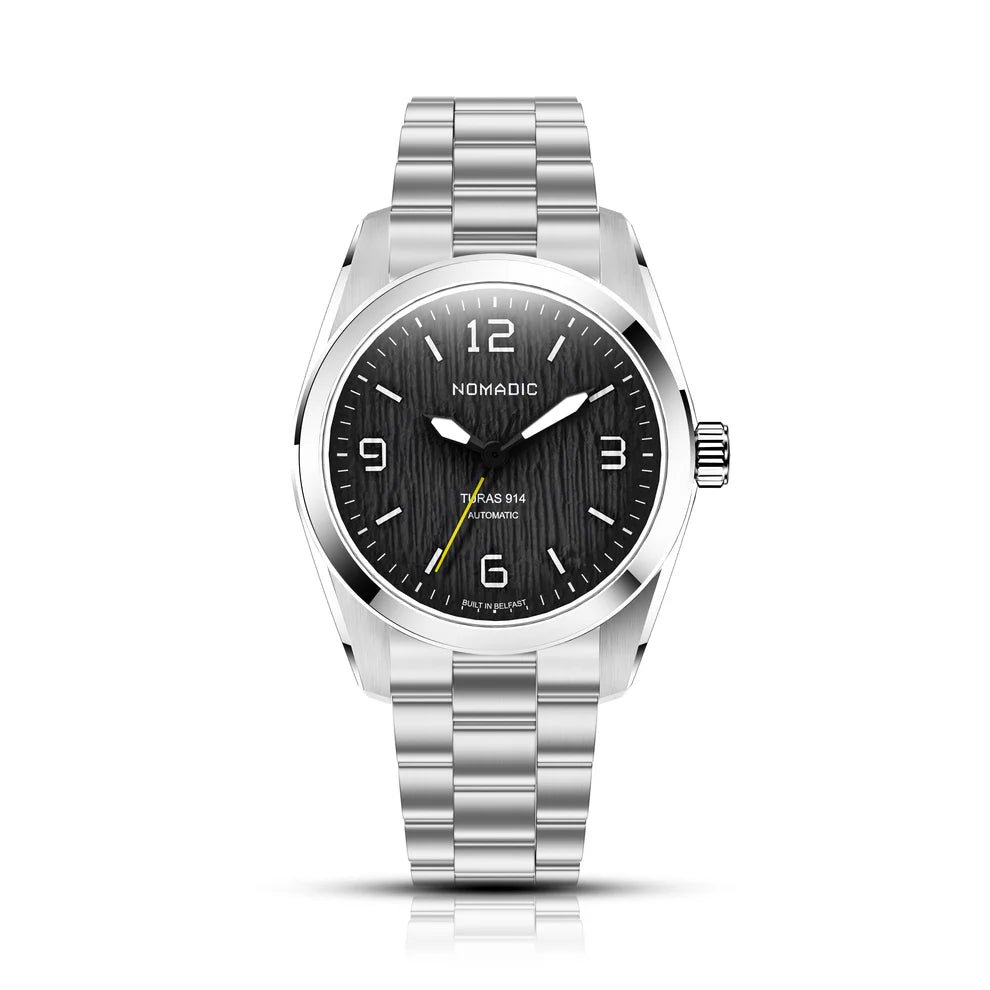
Quick take: the Nomadic Turas 914 is an expedition/field-adjacent everyday watch built around a proven Swiss automatic (Sellita SW200-1) and a very wearable 39mm case size. It’s positioned as a “go anywhere” option with a story rooted in exploration—and it’s assembled and regulated in Belfast.
At a glance
- Brand / assembly: Nomadic (assembled, regulated, and tested in Belfast)
- Model: Turas 914 “Black Ice” (39mm)
- Movement: Sellita SW200-1 automatic (Swiss-made)
- Vibe: explorer / expedition tool watch with field-watch legibility priorities
Specs quick sheet (verify your exact reference)
- Case size: 39mm (brand spec)
- Case material: 316L stainless steel (brand spec)
- Movement: Sellita SW200-1 automatic (brand spec)
- Power reserve: ~41 hours (brand spec)
- Bracelet: stainless steel (brand spec)
- Other key specs to confirm before buying: water resistance, crystal type, thickness, lug-to-lug, lug width, and clasp micro-adjust features (these can vary by version and listing).
If you’re new to the category, start with: What is a field watch? and the 10-point field watch checklist. (Those two links alone prevent a lot of buyer’s remorse.)
Design & legibility
Nomadic leans hard into the “expedition” theme—this is a watch meant to look at home outdoors but still feel clean enough for daily wear. The 39mm size is a smart choice for a field-style watch: big enough for quick reads, not so big that it becomes a desk-diver cliché.
Nomadic also mentions a redesigned handset to improve legibility. On a practical field watch, that matters more than decorative dial details.
Movement & ownership notes
The Turas 914 uses the Sellita SW200-1, a widely used Swiss automatic known for being serviceable and easy to live with. Nomadic states it’s regulated in-house in Belfast. The practical ownership features you generally want are here: hacking seconds, hand-winding, and a quick-set date.
What it’s like to wear day-to-day
On paper, the Turas 914 sits in a very wearable zone: 39mm, simple tool-watch layout, and a steel bracelet. In real life, what usually decides whether you keep a watch is the boring stuff: how it feels at a desk, whether the bracelet pinches, and whether you can get a comfortable fit without fighting the clasp.
- Bracelet comfort: a well-made bracelet should articulate smoothly and sit flat on the wrist. If you’re between sizes, clasp adjustment matters more than you think—so check whether the clasp has micro-adjust (and how much).
- Weight & balance: steel bracelets can make a watch feel “serious” but also top-heavy if the case is chunky. That’s why I’d still verify thickness before buying.
- Daily practicality: if you wear long sleeves a lot, thickness + bezel profile is what snags. If you wear it as a true outdoors beater, water resistance and crown feel are the big two.
Dial details: what’s good (and what to watch for)
Nomadic’s “expedition” styling works because it stays legibility-first. For a field-adjacent watch, you want: high contrast between hands and dial, a minute track you can actually use, and a handset that doesn’t disappear at certain angles. Nomadic mentions a redesigned handset to improve legibility—which is exactly the kind of improvement that matters more than decorative dial texture.
What I’d personally double-check on the exact variant you’re buying:
- Anti-reflective coating: AR on the crystal is a huge quality-of-life upgrade for quick reads outdoors.
- Date window execution: does it cut into numerals or keep the layout clean?
- Bezel usefulness: if your model has a timing bezel, make sure it’s grippy enough to use with cold hands.
Lume & low-light performance
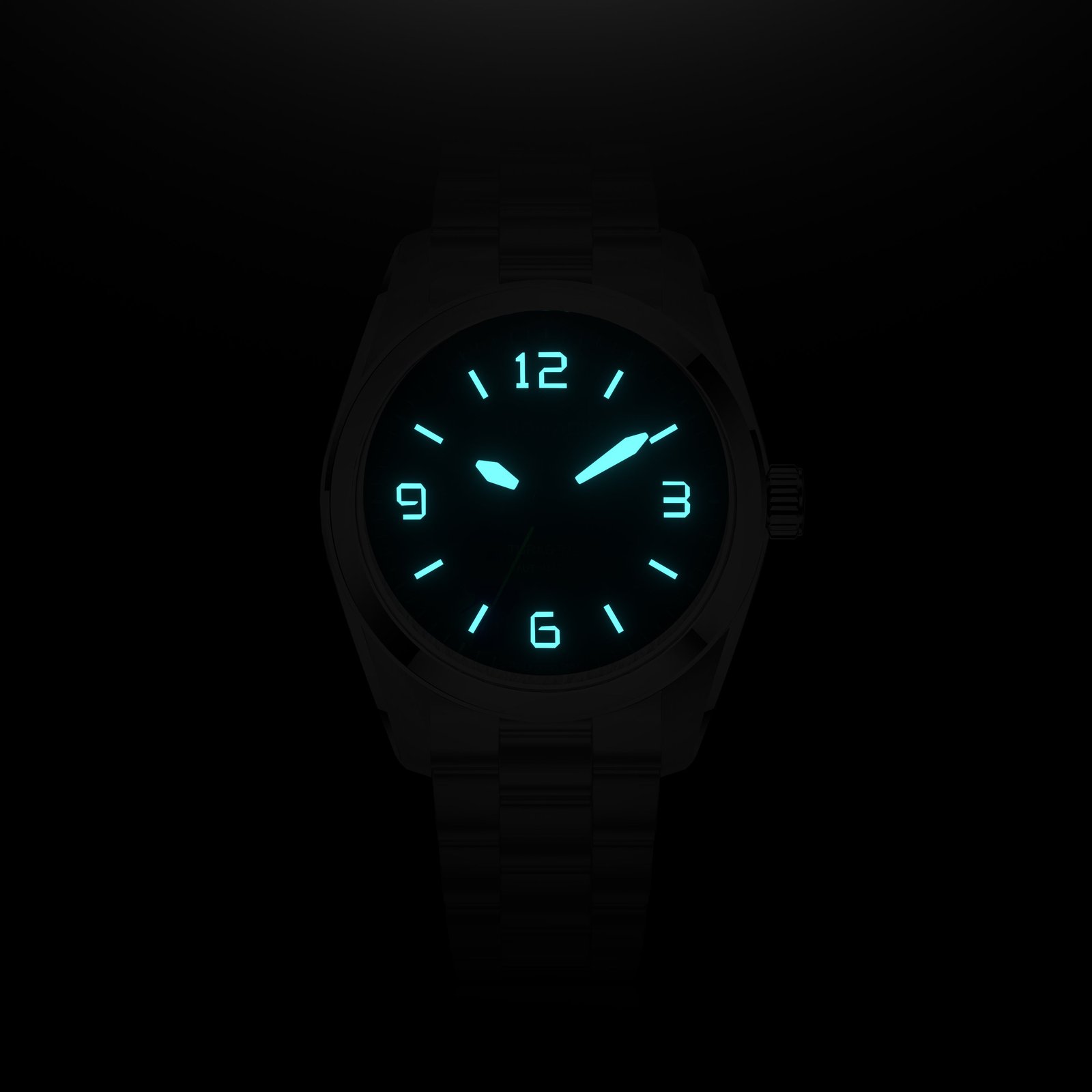
The included lume shot is promising, but the practical question is consistency: does the minute hand stay readable, and are the markers bright enough after 20–30 minutes? If night legibility is a priority, compare against tritium options like Marathon, or pick a dial layout with thicker hands/markers.
Accuracy expectations (Sellita SW200-1)
A well-regulated SW200-1 can be a very satisfying everyday movement. Don’t expect quartz-like accuracy, but you can expect predictable behavior if the watch is regulated properly. If you’re picky, ask yourself what “good enough” means: within ~10 seconds/day is usually fine for most people; if you want tighter, you’ll either need luck, regulation, or to step up to a different tier.
On-wrist fit (39mm done right)
39mm is in the sweet spot for a modern field/explorer watch. The one thing I always recommend checking before you commit is lug-to-lug and thickness—those two measurements determine whether it wears “compact” or “slabby”. If you have a smaller wrist, use our checklist and prioritize short lug-to-lug over headline diameter.
Durability: what to confirm
Based on the brand’s positioning, you’d expect a solid daily-wear spec (decent water resistance, sapphire, etc.), but the safe approach is to confirm these on the official listing for your exact variant. If you want a quick refresher on what ratings actually mean, see: Water resistance explained (30m vs 50m vs 100m).
Alternatives (and why you might pick them instead)
- Hamilton Khaki Field Mechanical (H-50) — the classic choice if you want “field watch” in its purest modern form.
- Marathon GPQ — compact military DNA + tritium; great if you want maximum night visibility.
- Traska Summiteer — a microbrand field/explorer hybrid with strong value (draft review on our site).
More microbrand options live on our Microbrands hub.
Buying notes
- Price: Nomadic lists the Black Ice around €1,345 at the time of writing (verify current pricing).
- Confirm the basics: WR, crystal, lug width, and clasp adjustment details on the official product page.
- Shipping/returns: check the brand’s current policy (Nomadic mentions a 30-day trial + lifetime guarantee).
Who it’s for (and who should skip it)
- Great fit if: you want a modern, field-adjacent explorer watch in a wearable size; you like a clean dial with practical legibility; and you value a Swiss automatic that’s easy to service long-term.
- Maybe skip if: you want “pure” vintage-style field watch DNA (Hamilton/Benrus-style), you need guaranteed all-night visibility (go tritium), or you’re on a strict budget where Japanese automatics deliver 80% of the experience for less.
- If you’re rough on gear: confirm the exact water resistance and crystal before buying—those two determine whether it’s a true do-it-all watch or more of a daily wearer with an outdoors vibe.
Where to buy (Amazon)
- Amazon (US): Search “Nomadic Turas 914 watch”
Verdict
If you want a 39mm expedition watch with a credible, serviceable Swiss automatic and a strong brand narrative (and you like the idea of a watch assembled and regulated in Belfast), the Turas 914 is worth a hard look. Just make sure you verify the “hard specs” that matter to you—especially water resistance and crystal—before you buy.
Next step: if you’re comparing options around this size and price, you’ll get more clarity by revisiting our field watch checklist and then scanning a few alternatives in our Reviews.